FRCS Paediatric Ortho — improved notes
FRCS Paediatric Ortho — visual inline notes

005. Graf classification

visual-inline rebuild1 extracted figuresspeaker notes XML17 study lines3 Q&A

Individual slide images have been cropped from the rendered slide and inserted beside the matching note section. The full slide remains below only for layout/audit.

Clean FRCS notes with inline figures

Graf classification
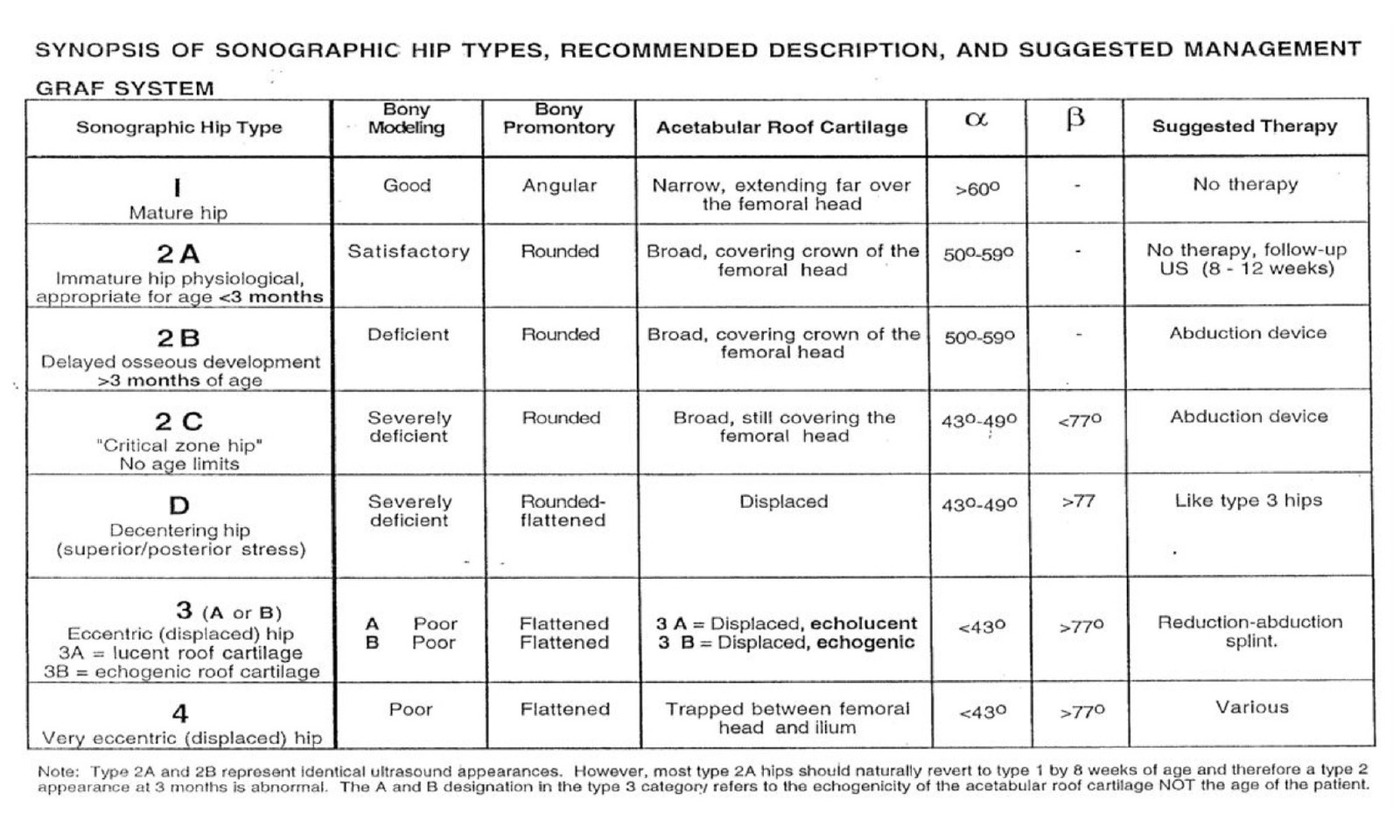
Classification / diagram - Graf classification diagram
Fig 1. Classification / diagram - Graf classification diagramtop left
•Static USG look at 2 things to represent femoral head coverage
•1. Alpha angle
Type / groupDefinition / note
I>60: normal
•IIA 50-59: <3mon, FU with USG at 3m
•IIB 50-59, start PH
•IIC: <50: start PH
•IIA: Physiological immature, <3m
•IIB: >3m, delayed osseous development
•IIC: Critical zone hip
Type / groupDefinition / note
DDecentering
IIIDisplaced
IVHigh dislocation
•2. Beta angle
•Dynamic USG – Harcke
•Visualized Barlow test
•Repeat USG in IIA and IIB at 3m to assess remodeling of acetabulum

Direct Q&A

Q1 What diagnostic or radiographic findings support Graf classification?

Graf classification

•Static USG look at 2 things to represent femoral head coverage
•1. Alpha angle
Type / groupDefinition / note
I>60: normal
•IIA 50-59: <3mon, FU with USG at 3m
•IIB 50-59, start PH
•IIC: <50: start PH
•IIA: Physiological immature, <3m
•IIB: >3m, delayed osseous development
•IIC: Critical zone hip
Q2 How is Graf classification classified here?
•Static USG look at 2 things to represent femoral head coverage
•1. Alpha angle
•I: >60: normal
•IIA 50-59: <3mon, FU with USG at 3m
•IIB 50-59, start PH
•IIC: <50: start PH
•IIA: Physiological immature, <3m
•IIB: >3m, delayed osseous development
•IIC: Critical zone hip
•D: Decentering
•III: Displaced
•IV: High dislocation
•2. Beta angle
•Dynamic USG – Harcke
•Visualized Barlow test
•Repeat USG in IIA and IIB at 3m to assess remodeling of acetabulum
Q3 How is Graf classification managed?

IIC: Critical zone hip

•D: Decentering
•III: Displaced
•IV: High dislocation
•2. Beta angle
•Dynamic USG – Harcke
•Visualized Barlow test
•Repeat USG in IIA and IIB at 3m to assess remodeling of acetabulum

Raw speaker-note hierarchy audit

#lvlmarLindentlogicaloriginal note line
10NoneNone0Graf classification
20NoneNone0Static USG look at 2 things to represent femoral head coverage
30NoneNone01. Alpha angle
40NoneNone0I: >60: normal
50NoneNone0IIA 50-59: <3mon, FU with USG at 3m
60NoneNone0IIB 50-59, start PH
70NoneNone0IIC: <50: start PH
80NoneNone0IIA: Physiological immature, <3m
90NoneNone0IIB: >3m, delayed osseous development
100NoneNone0IIC: Critical zone hip
110NoneNone0D: Decentering
120NoneNone0III: Displaced
130NoneNone0IV: High dislocation
140NoneNone02. Beta angle
150NoneNone0Dynamic USG – Harcke
160171450-1714501Visualized Barlow test
170000Repeat USG in IIA and IIB at 3m to assess remodeling of acetabulum

Improved semantic hierarchy used for the study notes

#semantic levelsection?rewritten line
10yesGraf classification
21Static USG look at 2 things to represent femoral head coverage
311. Alpha angle
41I: >60: normal
51IIA 50-59: <3mon, FU with USG at 3m
61IIB 50-59, start PH
71IIC: <50: start PH
81IIA: Physiological immature, <3m
91IIB: >3m, delayed osseous development
101IIC: Critical zone hip
111D: Decentering
121III: Displaced
131IV: High dislocation
1412. Beta angle
151Dynamic USG – Harcke
161Visualized Barlow test
171Repeat USG in IIA and IIB at 3m to assess remodeling of acetabulum