FRCS Paediatric Ortho — improved notes
FRCS Paediatric Ortho — visual inline notes

026. Posteromedial tibial bowing

visual-inline rebuild1 extracted figuresspeaker notes XML16 study lines1 Q&A

Individual slide images have been cropped from the rendered slide and inserted beside the matching note section. The full slide remains below only for layout/audit.

Clean FRCS notes with inline figures

•On the left is a clinical photo of a baby with left leg bowing with apex posterior
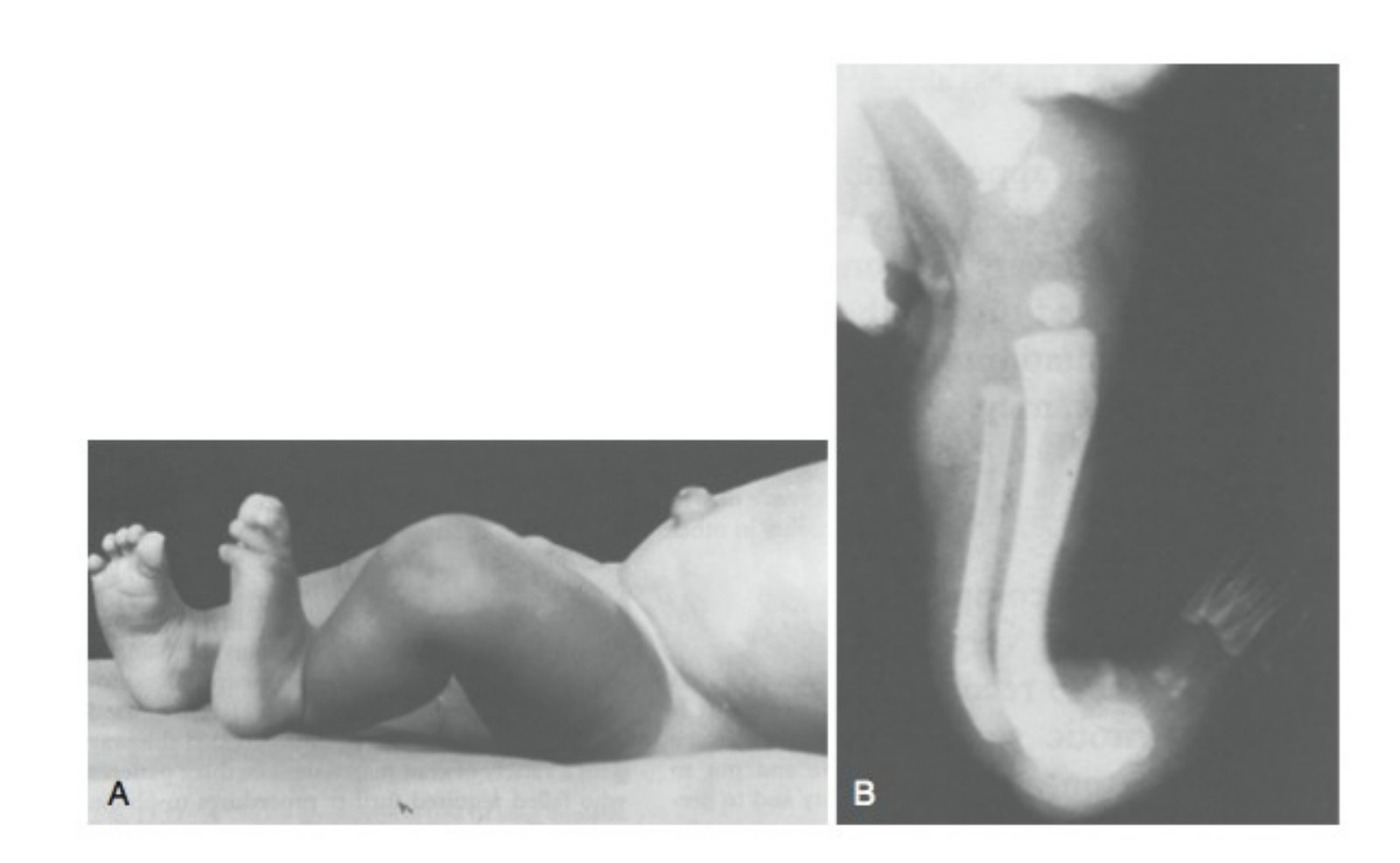
Clinical photograph - posteromedial bowing clinical photograph
Fig 1. Clinical photograph - posteromedial bowing clinical photographtop left
•The ankle is not in a normal resting posture
•On the right is Xray of the patient with tibia and fibular bowing with apex post
•Correlate clinically and obtain AP Xray to see whether the bowing is posteromedial

Diagnosis: posteromedial bowing

•Which is physiological and commonly associated with intra-uterine malpositioning
•It has a benign course, usually will self remodel, do not have syndromal correlation

History and PE

•Multiple pregnancy, oligohydromnios, packaging syndrome (including torticollis, DDH, metatarsal adductus)
•Also check ankle for calcaneovalgus feet

PM bowing vs calcaneovalgus:

•Look for CORA (at distal tibia vs at foot)
•Dorsum of foot touching tibia = calcaneovalgus
•Physiotherapy for stretching
•Monitor for correction and LLD
•Expect LLD ~ 3-4cm

Direct Q&A

Q1 What are the diagnostic findings and management points for Posteromedial tibial bowing?
•On the left is a clinical photo of a baby with left leg bowing with apex posterior
•The ankle is not in a normal resting posture
•On the right is Xray of the patient with tibia and fibular bowing with apex post
•Correlate clinically and obtain AP Xray to see whether the bowing is posteromedial

Diagnosis: posteromedial bowing

•Which is physiological and commonly associated with intra-uterine malpositioning
•It has a benign course, usually will self remodel, do not have syndromal correlation

History and PE

•Multiple pregnancy, oligohydromnios, packaging syndrome (including torticollis, DDH, metatarsal adductus)
•Also check ankle for calcaneovalgus feet

PM bowing vs calcaneovalgus:

•Look for CORA (at distal tibia vs at foot)
•Dorsum of foot touching tibia = calcaneovalgus
•Physiotherapy for stretching
•Monitor for correction and LLD
•Expect LLD ~ 3-4cm

Raw speaker-note hierarchy audit

#lvlmarLindentlogicaloriginal note line
10NoneNone0On the left is a clinical photo of a baby with left leg bowing with apex posterior
20NoneNone0The ankle is not in a normal resting posture
30NoneNone0On the right is Xray of the patient with tibia and fibular bowing with apex post
40NoneNone0I would like to correlate clinically and have AP Xray to see whether the bowing is posteromedial
50NoneNone0Dx: posteromedial bowing
60NoneNone0Which is physiological and commonly associated with intra-uterine malpositioning
70NoneNone0It has a benign course, usually will self remodel, do not have syndromal correlation
80NoneNone0History and PE
90NoneNone0Multiple pregnancy, oligohydromnios, packaging syndrome (including torticollis, DDH, metatarsal adductus)
100000Also check ankle for calcaneovalgus feet
110NoneNone0PM bowing vs calcaneovalgus:
120171450-1714501Look for CORA (at distal tibia vs at foot)
130171450-1714501Dorsum of foot touching tibia = calcaneovalgus
140NoneNone0Physiotherapy for stretching
150NoneNone0Monitor for correction and LLD
160NoneNone0Expect LLD ~ 3-4cm

Improved semantic hierarchy used for the study notes

#semantic levelsection?rewritten line
10On the left is a clinical photo of a baby with left leg bowing with apex posterior
21The ankle is not in a normal resting posture
31On the right is Xray of the patient with tibia and fibular bowing with apex post
41Correlate clinically and obtain AP Xray to see whether the bowing is posteromedial
50yesDiagnosis: posteromedial bowing
61Which is physiological and commonly associated with intra-uterine malpositioning
71It has a benign course, usually will self remodel, do not have syndromal correlation
80yesHistory and PE
91Multiple pregnancy, oligohydromnios, packaging syndrome (including torticollis, DDH, metatarsal adductus)
101Also check ankle for calcaneovalgus feet
110yesPM bowing vs calcaneovalgus:
121Look for CORA (at distal tibia vs at foot)
131Dorsum of foot touching tibia = calcaneovalgus
141Physiotherapy for stretching
151Monitor for correction and LLD
161Expect LLD ~ 3-4cm