Clean FRCS notes with inline figures
Clinical photo showing classic W sitting position
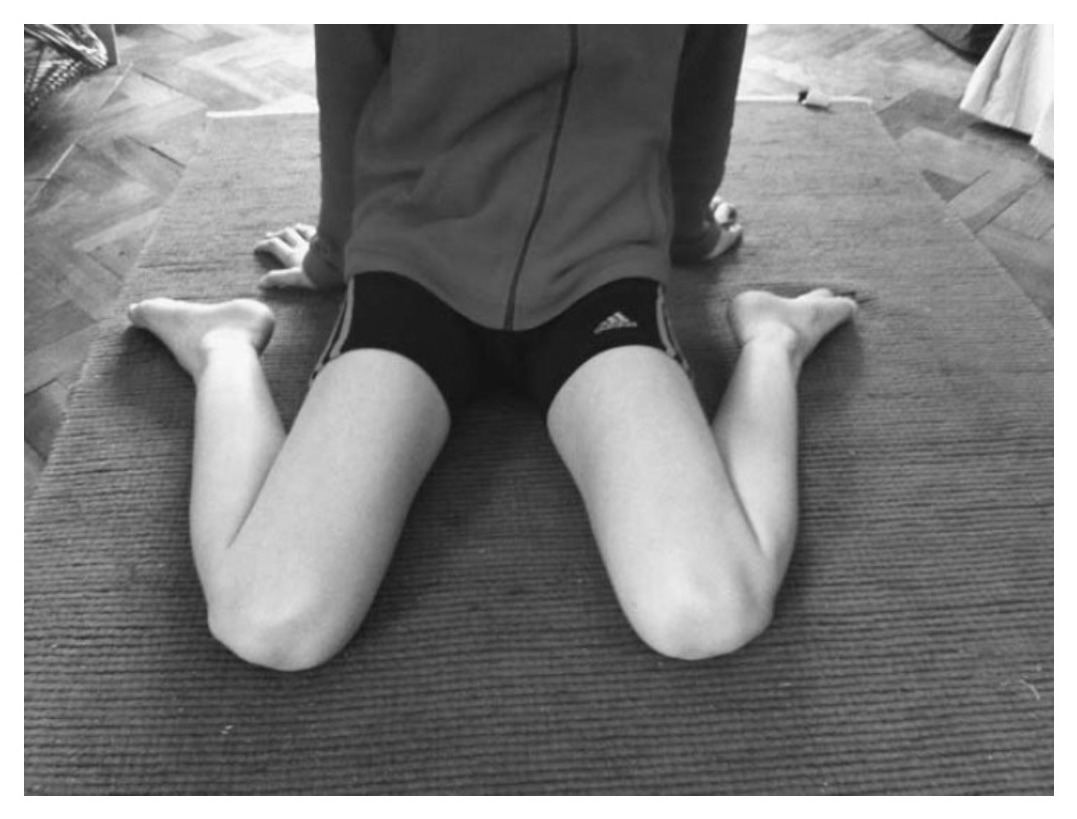
•I suspect the patient may be suffering or presenting with in-toe gait [PGO: fem anteversion]
History
Birth and perinatal history
•Developmental milestones
•Current problems: pain, limp, frequent tripping
•Onset and progression of intoeing
Examination
•Staheli rotational profile
•Femoral anteversion
•Hip ER/IR 20/70
•Craig’s test
•Tibial torsion
•Thigh foot angle -10 to 40
•Transmalleolar axis (when foot deformity+) → any negative is abnormal
•Heel bisector line – 2nd toe
•Foot progression angle: -5 to 20 deg
•Check spine, hips (DDH) and knees (blounts)
•Check ligamentous laxity
Management
•Once p. Neonate to childhood, there will be reduction in femoral anteversion and increase in tibial ER torsion
•→ Family may be interested to learn that the only effective treatment is to cut the femur, rotate it and fix it, which is a major surgical procedure with risks, for essentially a cosmetic problem
Indications for surgery:
•Thigh foot angle <-10 or >40
•Femoral anteversion >50 or hip IR >80
•+ disabling sx (rare as muscle balance improved into adulthood and it rarely presents a functional problem)
•Timing >10 yrs
•Femur: Intertrochanteric femoral osteotomy
•Tibial: supramalleolar tibial osteotomy
•Causes of intoe
•Infancy: MT adductus, tibial intorsion
•Toddler: tibial intorsion
•Childhood: femoral anteversion
•Pathological: DDH, CP, Blounts
•Causes of out toe
•Pes planus
•Femoral retroversion
•Infancy: hip ER contracture
•Later childhood: tibial extorsion
•Pathological: SCFE, Perthes, PFFD
Natural history of femoral version
•At birth: 30-40 anteversion
•Adult 8-15 anteversion
Natural history of tibia version (transmalleolar-thigh angle)
•at birth: 2-4 ER
•Adult: 10-20 ER