FRCS Paediatric Ortho — improved notes
FRCS Paediatric Ortho — visual inline notes

011. DDH presenting after 18 months

visual-inline rebuild1 extracted figuresspeaker notes XML26 study lines3 Q&A

Individual slide images have been cropped from the rendered slide and inserted beside the matching note section. The full slide remains below only for layout/audit.

Clean FRCS notes with inline figures

•Presented >18mths
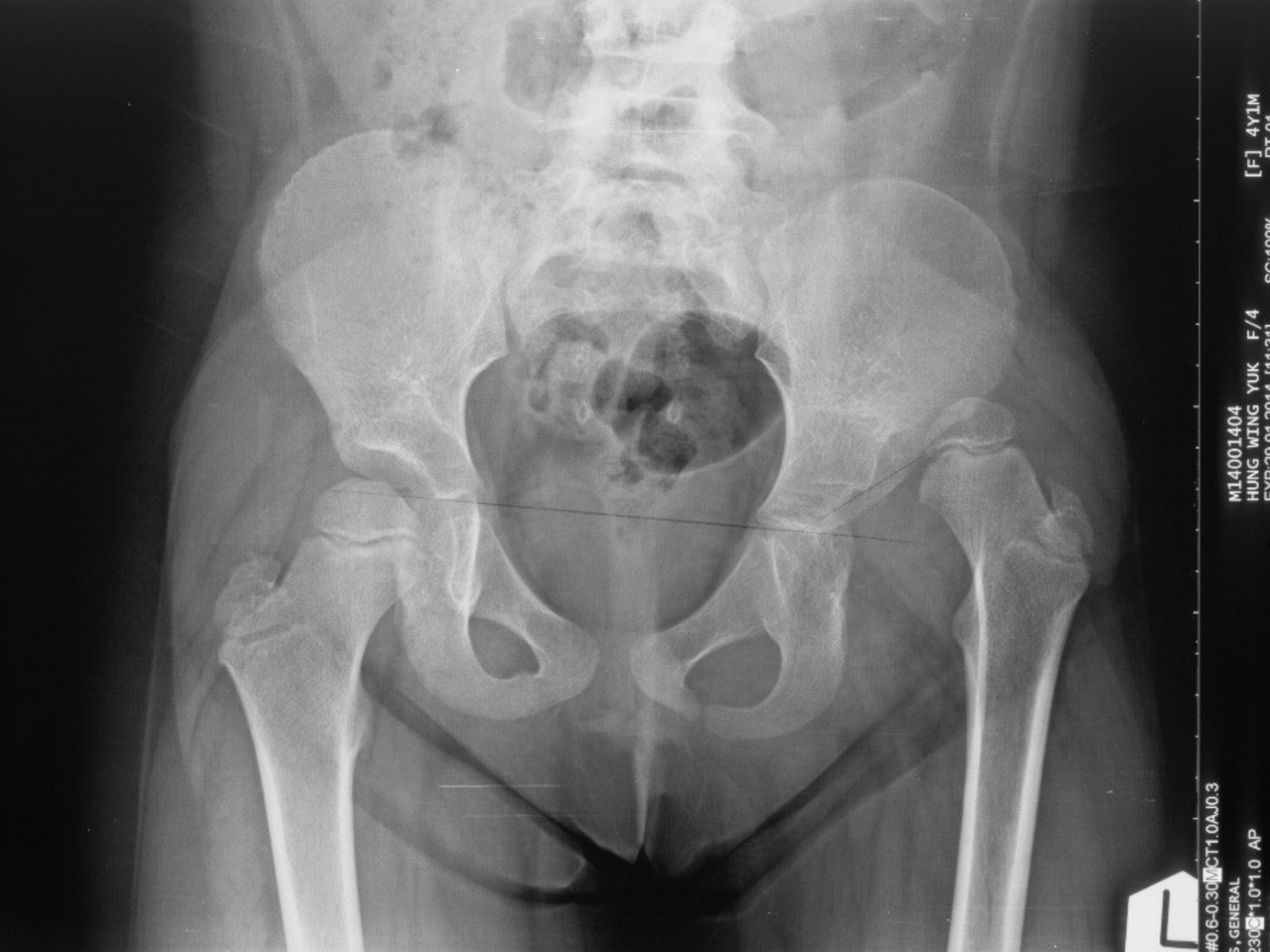
Radiograph / imaging - radiograph
Fig 1. Radiograph / imaging - radiographtop left
•XR (>6m) of this patient’s pelvis, skeletally immature with open triradiate cartilage. The most obvious finding is a dislocated left hip. The femoral epiphyseal looks small, and the neck shaft angle is more than the right side. The tear drop is poorly formed and the acetabulum margins are not well defined. The Shenton's line is obviously broken
•Further ix: XR von rosen views to check if reducible
•DDx: NM hip dislocation
•Aim: stable, congruent, concentric reduction without too much tension to have painless hip with good ROM. Prevent complications

Treatment:

•OR +/- osteotomy

Anterior approach for this case

Reason:

•Better exposure
•Can do capsulorrhaphy and pelvic osteotomy

Avoid complication of injuring medial femoral circumflex

•Can attack intraarticular obstacles to relocation
•Precautions: iliac apophysis and stripping of abductors, more bleeding
•Femoral osteotomy if need to maintain reduction in IR and abduction, in the form of VDRO +/- shortening
•Acetabular osteotomy if need to maintain in flexion
•Choice of which type of osteotomy (age)
•2-10 yrs
•Redirection – Salter, triple
•Reshape – Pemberton for AL deficiency (Dega for PL deficiency)
•10-14 yrs
•Open triradiate cartilage – Triple
•Close triradiate cartilage – Ganz PAO
•>14yo
•Chiari / Shelf procedure, as no remodeling
•+/- Shortening in >3 yo (chronic shortening → contracted soft tissue → increase tension on femoral head after reduction → AVN)

Direct Q&A

Q1 What diagnostic or radiographic findings support DDH presenting after 18 months?
•Presented >18mths
•XR (>6m) of this patient’s pelvis, skeletally immature with open triradiate cartilage. The most obvious finding is a dislocated left hip. The femoral epiphyseal looks small, and the neck shaft angle is more than the right side. The tear drop is poorly formed and the acetabulum margins are not well defined. The Shenton's line is obviously broken
•Further ix: XR von rosen views to check if reducible
•DDx: NM hip dislocation
•Aim: stable, congruent, concentric reduction without too much tension to have painless hip with good ROM. Prevent complications

Treatment:

•OR +/- osteotomy

Anterior approach for this case

Reason:

•Better exposure
Q2 How is DDH presenting after 18 months managed?

OR +/- osteotomy

Q3 What complications are listed for DDH presenting after 18 months?

Can attack intraarticular obstacles to relocation

•Precautions: iliac apophysis and stripping of abductors, more bleeding
•Femoral osteotomy if need to maintain reduction in IR and abduction, in the form of VDRO +/- shortening
•Acetabular osteotomy if need to maintain in flexion
•Choice of which type of osteotomy (age)
•2-10 yrs
•Redirection – Salter, triple
•Reshape – Pemberton for AL deficiency (Dega for PL deficiency)
•10-14 yrs
•Open triradiate cartilage – Triple
•Close triradiate cartilage – Ganz PAO
•>14yo
•Chiari / Shelf procedure, as no remodeling
•+/- Shortening in >3 yo (chronic shortening → contracted soft tissue → increase tension on femoral head after reduction → AVN)

Raw speaker-note hierarchy audit

#lvlmarLindentlogicaloriginal note line
10NoneNone0Presented >18mths
20000XR (>6m) of this patient’s pelvis, skeletally immature with open triradiate cartilage. The most obvious finding is a dislocated left hip. The femoral epiphyseal looks small, and the neck shaft angle is more than the right side. The tear drop is poorly formed and the acetabulum margins are not well defined. The Shenton's line is obviously broken
30NoneNone0Further ix: XR von rosen views to check if reducible
40000DDx: NM hip dislocation
50000Aim: stable, congruent, concentric reduction without too much tension to have painless hip with good ROM. Prevent complications
60NoneNone0Treatment:
70NoneNone0OR +/- osteotomy
80NoneNone0Anterior approach for this case
90NoneNone0Reason:
100171450-1714501Better exposure
110171450-1714501Can do capsulorrhaphy and pelvic osteotomy
120171450-1714501Avoid complication of injuring medial femoral circumflex
130171450-1714501Can attack intraarticular obstacles to relocation
140171450-1714501Precautions: iliac apophysis and stripping of abductors, more bleeding
150NoneNone0Femoral osteotomy if need to maintain reduction in IR and abduction, in the form of VDRO +/- shortening
160NoneNone0Acetabular osteotomy if need to maintain in flexion
170NoneNone0Choice of which type of osteotomy (age)
180NoneNone02-10 yrs
190228600-2286001Redirection – Salter, triple
200228600-2286001Reshape – Pemberton for AL deficiency (Dega for PL deficiency)
21000010-14 yrs
220228600-2286001Open triradiate cartilage – Triple
230228600-2286001Close triradiate cartilage – Ganz PAO
240000>14yo
250228600-2286001Chiari / Shelf procedure, as no remodeling
260000+/- Shortening in >3 yo (chronic shortening → contracted soft tissue → increase tension on femoral head after reduction → AVN)

Improved semantic hierarchy used for the study notes

#semantic levelsection?rewritten line
11Presented >18mths
21XR (>6m) of this patient’s pelvis, skeletally immature with open triradiate cartilage. The most obvious finding is a dislocated left hip. The femoral epiphyseal looks small, and the neck shaft angle is more than the right side. The tear drop is poorly formed and the acetabulum margins are not well defined. The Shenton's line is obviously broken
31Further ix: XR von rosen views to check if reducible
41DDx: NM hip dislocation
51Aim: stable, congruent, concentric reduction without too much tension to have painless hip with good ROM. Prevent complications
60yesTreatment:
71OR +/- osteotomy
80yesAnterior approach for this case
90yesReason:
101Better exposure
111Can do capsulorrhaphy and pelvic osteotomy
120yesAvoid complication of injuring medial femoral circumflex
131Can attack intraarticular obstacles to relocation
141Precautions: iliac apophysis and stripping of abductors, more bleeding
151Femoral osteotomy if need to maintain reduction in IR and abduction, in the form of VDRO +/- shortening
161Acetabular osteotomy if need to maintain in flexion
171Choice of which type of osteotomy (age)
1812-10 yrs
191Redirection – Salter, triple
201Reshape – Pemberton for AL deficiency (Dega for PL deficiency)
21110-14 yrs
221Open triradiate cartilage – Triple
231Close triradiate cartilage – Ganz PAO
241>14yo
251Chiari / Shelf procedure, as no remodeling
261+/- Shortening in >3 yo (chronic shortening → contracted soft tissue → increase tension on femoral head after reduction → AVN)