Clean FRCS notes with inline figures
Acute osteomyelitis
•Ddx tumour
XR comment on any sequestrum / involucrum
Pathophysiology
•Hematological spread
•Bacteria adhere and proliferate in metaphyseal region (hair pin turn with sluggish flow, low oxygen tension, acidic)
•Pus formation, drain along Haversian canal and Volkmann canal
•Break out as subperiosteal abscess
•high intra osseous pressure + poor blood supply due to elevated periosteum → bone ischemia (blood vessel thrombosis)→ Sequestrum
•Subperiosteal new bone formation → Involucrum
•Pus break through involucrum → Cloaca
•In neonate (<1.5yo, with patent transphyseal artery) or in intraarticular epiphysis (prox humerus, femur, radial head, distal fibular) → septic arthritis
Stages of acute osteomyelitis + DRAW
•Inflammation
•Suppuration
•Necrosis
•New bone formation
•Resolution
Common pathogens:
•Most common in all: Staph aureus
•Neonates: Group B strep, Hemophilus Influenza
•1-16 y.o.: strep pyogenes, Hemophilus influenza
Management
•Hx + PE (PMHx, recent injury, FtT, refuse walking, other source of infection)
•Common bacteria (staph, strep B and gram –ve rod in infant, MRSA)
Investigations
•blood (WBC CRP ESR, C/ST)
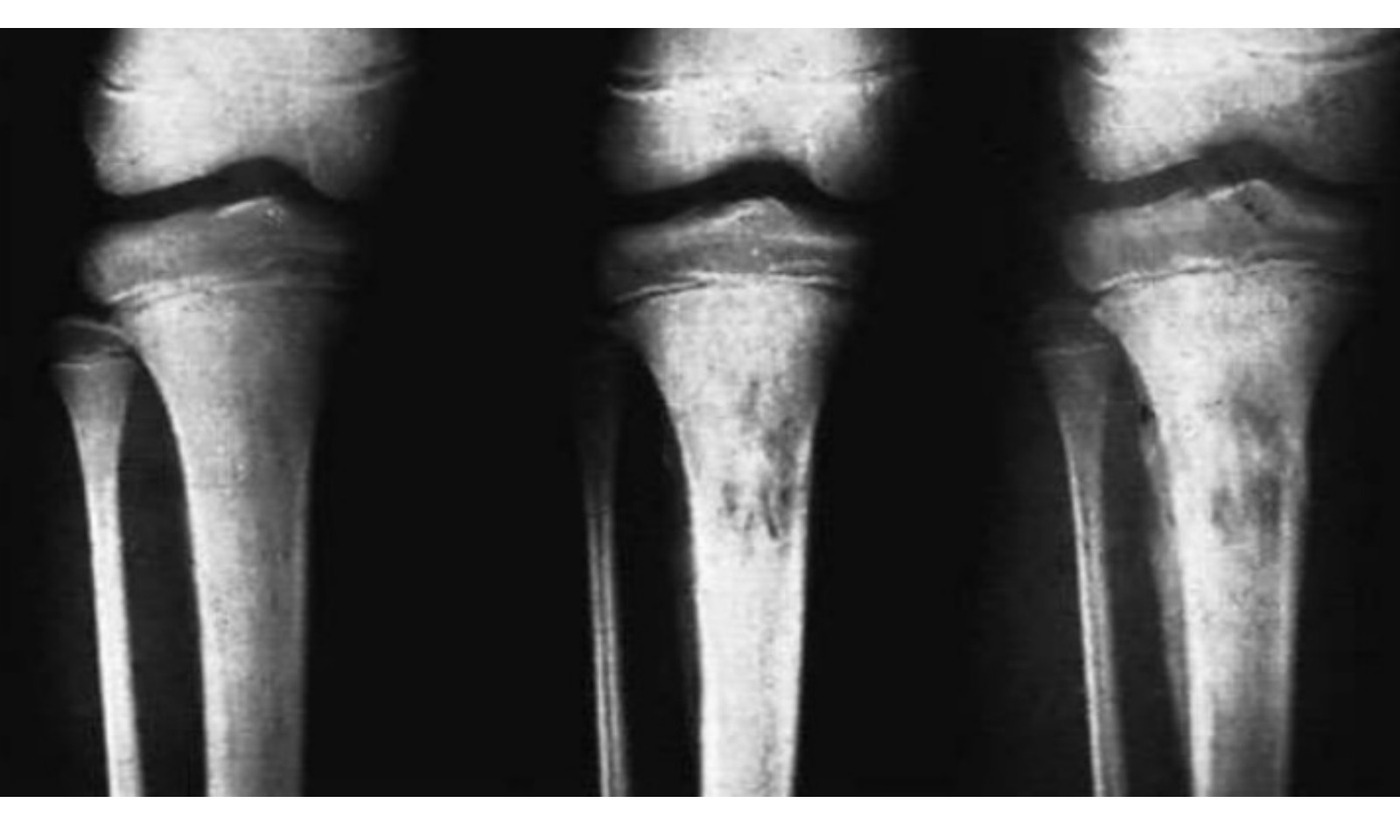
•Xray: 1st week XR normal, 1 week periosteal reaction, 2 week lytic lesion (metaphyseal rarefaction)
•MRI: early Dx, drainable abscess
•Bone scan: Indium / Technetium + gallium
•+/- Image guided aspiration
Indication of surgery:
•No systemic response to antibiotic for 48hrs (fever down, drop CRP)
•Drainable abscess
•Subperiosteal abscess: Incise periosteum and drainage
•Intramedullary abscess: Drill holes over metaphysis for IM release
Complication
•Chronic osteomyelitis (5%)
•LLD (over / undergrowth, arthritis, pathological #)
•30% will have concomitant septic arthritis
•→ Shoulder / elbow / hip/ ankle – intraarticular physis, spread to give septic arthritis
•→ Transphyseal vessels (disappear at 1.5yr of age) → septic arthritis