FRCS Paediatric Ortho — improved notes
FRCS Paediatric Ortho — visual inline notes

067. MHE forearm

visual-inline rebuild2 extracted figuresspeaker notes XML39 study lines6 Q&A

Individual slide images have been cropped from the rendered slide and inserted beside the matching note section. The full slide remains below only for layout/audit.

Clean FRCS notes with inline figures

MHE forearm

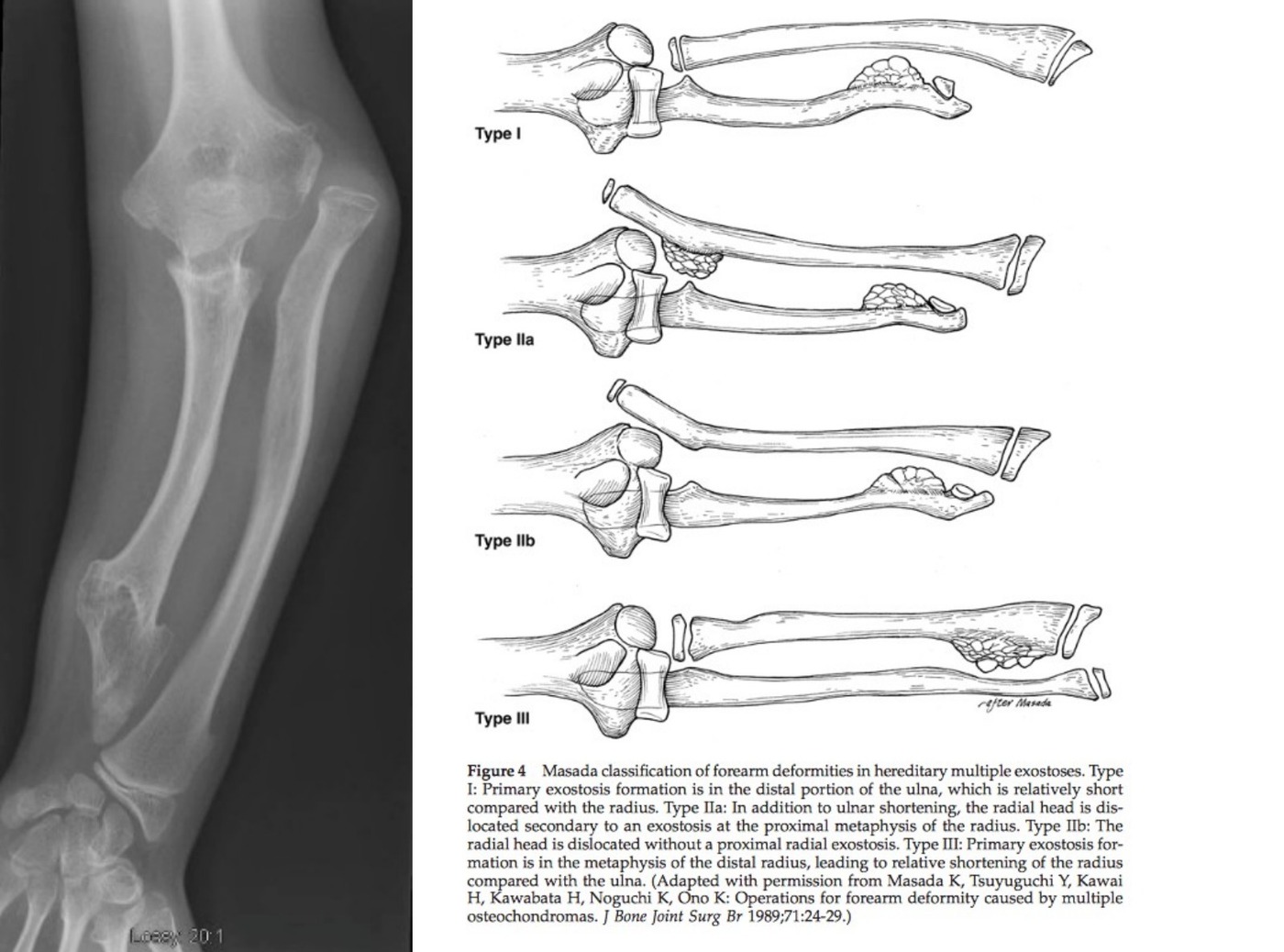
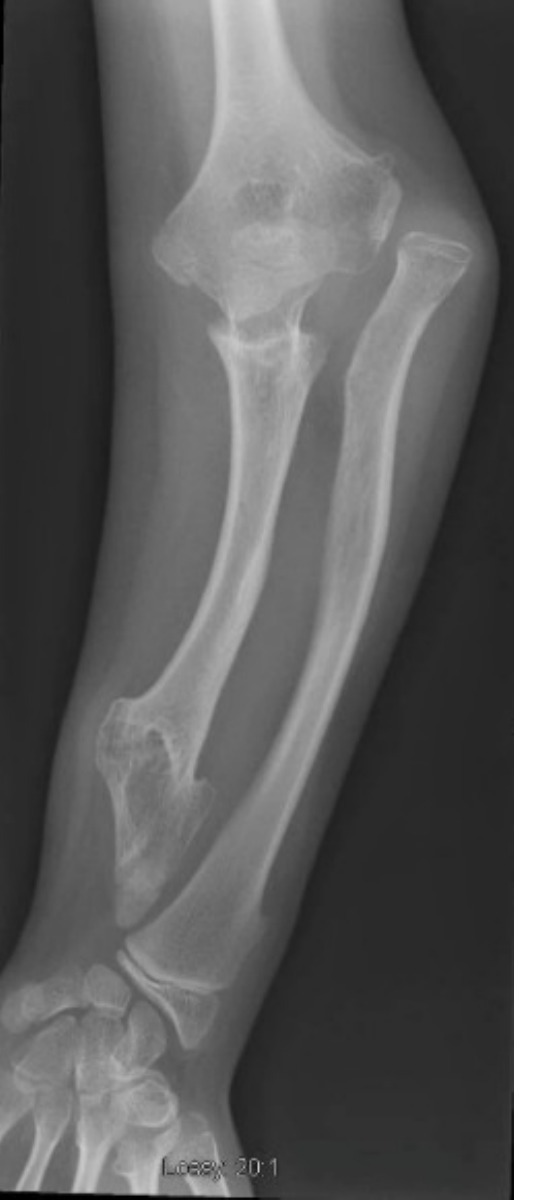
Xray of skeletally immature patient of forearm
Radiograph / imaging
Fig 1. Radiograph / imagingtop left
Radiograph / imaging
Fig 2. Radiograph / imagingtop left
•Shortening of ulna with ulnar negative variance and apex radial bowing
•Abnormal bony enlargement of ulnar head with associated bony exostosis
•Dislocated radial head
•Ulnar shift of carpus
•Ddx: tumour, malunion, Trevor disease

Mx: confirm diagnosis

•Look for other lesions → ?HME
•Rule out malignancy

See other complication: ROM, nerve compression

•Assess current function

Diagnosis: HME, Masada IIB

Management:

•Family counselling
•Risk of malignancy
•Risk of further deformity
•Functional impairment may not be improved with surgery, surgery mainly improves cosmesis

Indications for surgery (from MHE point of view)

•Clinically: enlarging mass after puberty, nerve, or skin impingement, pain
•Radiologically: cortical erosion, cartilaginous cap >2cm, soft tissue mineralisation >2cm

Indications for surgery (from deformity point of view)

•Ulnar shortening >1.5cm
•Radial articular angle >30 deg
•Carpal translocation >60%
•Painful subluxation of radial head
•Pronation <60 degrees

Timing of surgery controversial

Details of surgery:

•1. Excise exostosis to stop differential growth
•2. Ulnar lengthening (acute vs gradual depends on length)
•3. Radius reconstruction
•Proximal: unstable – one bone forearm, stable – radial head excision
•Distal: osteotomy/ hemiepiphysiodesis
•Systematic review 2018
•Ulnar lengthening +/- associated procedures can restore radiologic anatomy, improve appearance and to a lesser extent, objective clinical parameters on the short to intermediate term.
•There is poor evidence to demonstrate that these gains are maintained on long-term
•Impact of surgery on QOL and function has not been adequately investigated
•Considerable evidence suggests that surgery minimally impacts pre-op function

Direct Q&A

Q1 What are the radiographic findings for MHE forearm?
•Shortening of ulna with ulnar negative variance and apex radial bowing
•Abnormal bony enlargement of ulnar head with associated bony exostosis
•Dislocated radial head
•Ulnar shift of carpus
•Ddx: tumour, malunion, Trevor disease
Q2 What complications are listed for MHE forearm?

Assess current function

Q3 How is MHE forearm managed?

Family counselling

•Risk of malignancy
•Risk of further deformity
•Functional impairment may not be improved with surgery, surgery mainly improves cosmesis
Q4 What operative steps, indications, and risks are listed for Indications for surgery (from MHE point of view)?

Clinically: enlarging mass after puberty, nerve, or skin impingement, pain

•Radiologically: cortical erosion, cartilaginous cap >2cm, soft tissue mineralisation >2cm
Q5 What operative steps, indications, and risks are listed for Indications for surgery (from deformity point of view)?
•Ulnar shortening >1.5cm
•Radial articular angle >30 deg
•Carpal translocation >60%
•Painful subluxation of radial head
•Pronation <60 degrees
Q6 What operative steps, indications, and risks are listed for Details of surgery?
•1. Excise exostosis to stop differential growth
•2. Ulnar lengthening (acute vs gradual depends on length)
•3. Radius reconstruction
•Proximal: unstable – one bone forearm, stable – radial head excision
•Distal: osteotomy/ hemiepiphysiodesis
•Systematic review 2018
•Ulnar lengthening +/- associated procedures can restore radiologic anatomy, improve appearance and to a lesser extent, objective clinical parameters on the short to intermediate term.
•There is poor evidence to demonstrate that these gains are maintained on long-term
•Impact of surgery on QOL and function has not been adequately investigated
•Considerable evidence suggests that surgery minimally impacts pre-op function

Raw speaker-note hierarchy audit

#lvlmarLindentlogicaloriginal note line
10NoneNone0MHE forearm
20NoneNone0Xray of skeletally immature patient of forearm
30NoneNone0Shortening of ulna with ulnar negative variance and apex radial bowing
40NoneNone0Abnormal bony enlargement of ulnar head with associated bony exostosis
50NoneNone0Dislocated radial head
60NoneNone0Ulnar shift of carpus
70NoneNone0Ddx: tumour, malunion, Trevor disease
80NoneNone0Mx: confirm diagnosis
90228600-2286001Look for other lesions → ?HME
100228600-2286001Rule out malignancy
110228600-2286001See other complication: ROM, nerve compression
120228600-2286001Assess current function
130NoneNone0Dx: HME, Masada IIB
140NoneNone0Management:
150NoneNone0Family counselling
160171450-1714501Risk of malignancy
170171450-1714501Risk of further deformity
180171450-1714501Functional impairment may not be improved with surgery, surgery mainly improves cosmesis
190000Indications for surgery (from MHE point of view)
200171450-1714501Clinically: enlarging mass after puberty, nerve, or skin impingement, pain
210171450-1714501Radiologically: cortical erosion, cartilaginous cap >2cm, soft tissue mineralisation >2cm
220000Indications for surgery (from deformity point of view)
230228600-2286001Ulnar shortening >1.5cm
240228600-2286001Radial articular angle >30 deg
250228600-2286001Carpal translocation >60%
260228600-2286001Painful subluxation of radial head
270228600-2286001Pronation <60 degrees
280000Timing of surgery controversial
290NoneNone0Details of surgery:
300NoneNone01. Excise exostosis to stop differential growth
310NoneNone02. Ulnar lengthening (acute vs gradual depends on length)
320NoneNone03. Radius reconstruction
330171450-1714501Proximal: unstable – one bone forearm, stable – radial head excision
340171450-1714501Distal: osteotomy/ hemiepiphysiodesis
350NoneNone0Systematic review 2018
360171450-1714501Ulnar lengthening +/- associated procedures can restore radiologic anatomy, improve appearance and to a lesser extent, objective clinical parameters on the short to intermediate term.
370171450-1714501There is poor evidence to demonstrate that these gains are maintained on long-term
380171450-1714501Impact of surgery on QOL and function has not been adequately investigated
390171450-1714501Considerable evidence suggests that surgery minimally impacts pre-op function

Improved semantic hierarchy used for the study notes

#semantic levelsection?rewritten line
10MHE forearm
20yesXray of skeletally immature patient of forearm
31Shortening of ulna with ulnar negative variance and apex radial bowing
41Abnormal bony enlargement of ulnar head with associated bony exostosis
51Dislocated radial head
61Ulnar shift of carpus
71Ddx: tumour, malunion, Trevor disease
80yesMx: confirm diagnosis
91Look for other lesions → ?HME
101Rule out malignancy
110yesSee other complication: ROM, nerve compression
121Assess current function
130yesDiagnosis: HME, Masada IIB
140yesManagement:
151Family counselling
161Risk of malignancy
171Risk of further deformity
181Functional impairment may not be improved with surgery, surgery mainly improves cosmesis
190yesIndications for surgery (from MHE point of view)
201Clinically: enlarging mass after puberty, nerve, or skin impingement, pain
211Radiologically: cortical erosion, cartilaginous cap >2cm, soft tissue mineralisation >2cm
220yesIndications for surgery (from deformity point of view)
231Ulnar shortening >1.5cm
241Radial articular angle >30 deg
251Carpal translocation >60%
261Painful subluxation of radial head
271Pronation <60 degrees
280yesTiming of surgery controversial
290yesDetails of surgery:
3011. Excise exostosis to stop differential growth
3112. Ulnar lengthening (acute vs gradual depends on length)
3213. Radius reconstruction
331Proximal: unstable – one bone forearm, stable – radial head excision
341Distal: osteotomy/ hemiepiphysiodesis
351Systematic review 2018
361Ulnar lengthening +/- associated procedures can restore radiologic anatomy, improve appearance and to a lesser extent, objective clinical parameters on the short to intermediate term.
371There is poor evidence to demonstrate that these gains are maintained on long-term
381Impact of surgery on QOL and function has not been adequately investigated
391Considerable evidence suggests that surgery minimally impacts pre-op function