Clean FRCS notes with inline figures
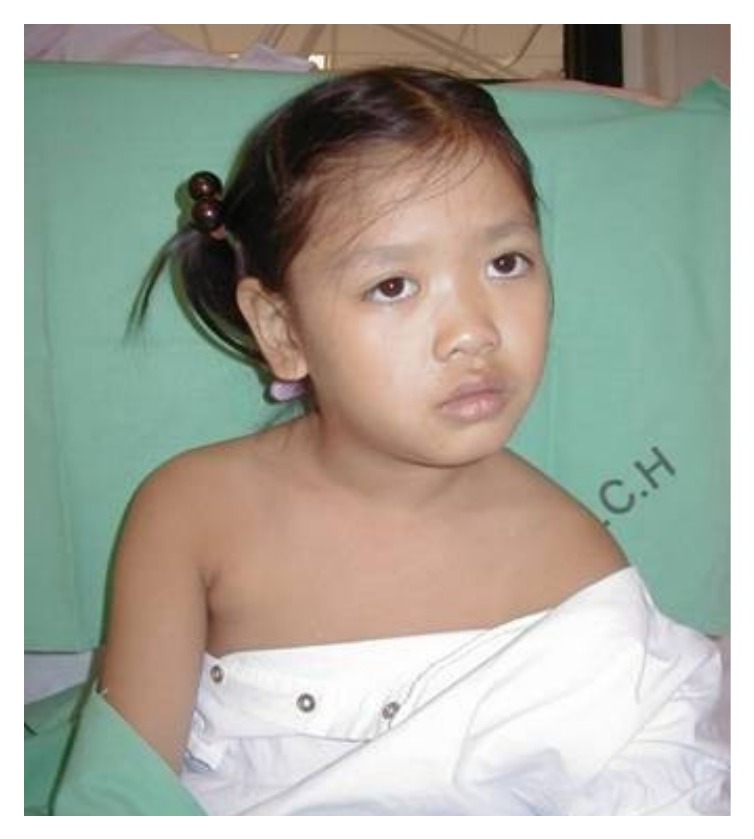
•This is a clinical photo showing a paed patient with right sided torticollis
•Evidenced by the head tilting to the right side and rotating to the left side
•There is no plagiocephaly or facial asymmetry noted, over the neck there is no scar, no obvious strabismus noted
•Cock robin posture
History
•Perinatal history (Breech, 1st born, oligohydramios), known congenital conditions (e.g. Klippel Feil syndrome)
•PAIN
Acute painful vs chronic painless
•Onset of symptoms, progression, trauma, previous treatment or H&N
•Any hearing or optical impairment
•Any recently URI sx
•Functional impairment
Examination
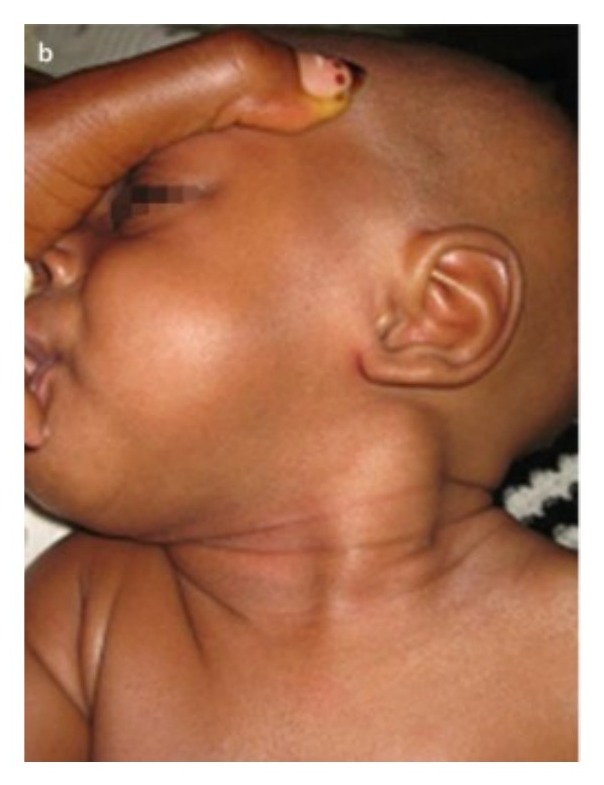
•1. Plagiocephaly, low hair line, scapula (KF syndrome)
•2. Facial dysmorphic features or facial asymmetry
•3. SCM spasm, tumour, cervical LN
•4. Rotation and tilt lag 15deg
•5. Squint, hearing
•6. Neuro exam
•If newborn, look for other packaging disorders
Investigations
•Bloods: CBC, inflammatory markers
•Xray look for lateral mass asymmetry in open mouth view, lateral to see ADI, trapezoidal anterior C1 shadow, oval posterior arch sign. Also to exclude fracture or congenital abnormalities
•Dynamic CT is gold standard for AARI (only book it if failed initial conservative management)
•Look for fixed rotation of C1/2 relationship
•+/- contrast to r/o retropharyngeal abscess if raised inflammatory markers
•+/- MRI to exclude underlying infection or tumor
Fielding CT classification:
•Unilateral subluxation with intact transverse ligament (dens is the pivot point)
•Unilateral ant subluxation 3-5mm (opposite facet acts as pivot)
•Bilateral ant subluxation >5mm
•Post subluxation (dens deficiency)
•Dynamic CT (3 sets) to look for fixed relationship between C1 and C2
•Normal C1/2 rotation
•Phase 1-3
| Type / group | Definition / note |
|---|---|
| 1 | Purely C1 rotate, up to 21deg (SCM pulls skull, OC segment no rotation) |
| 2 | C1 C2 rotate together, (C2 pulled by alar ligament) |
| 3 | C1 C2 fixed and rotate together |
•Mx depends on timing
•<1w: Soft neck collar, analgesics
•1-4w: (“1hr off ,3hr on” cycle) 2-3kg till reduced with reverse Trendelenburg (full rotation over both direction) then SOMI 4wk (if failed after 4w to OT)
•>4w: Halo traction 4w as well, high chance of failure then OT x fuse C1/2 (other indications: irreducible >3 months, neurological deficit, recurrent)
•Grisel’s syndrome: drainage of inflammatory mediators through pharyngovertebral vein to periodontoid plexus → ligamentous laxity
•CMT
•Remember to look for other packaging disorders
•Pathophysiology: local compartment syndrome of SCM avascular fibrous band formation
•Operation
•Presentation >1yo
•>15 deg Head tilt, lag, with tumour
Failed conservative management x 6m
•Unipolar (sternal head <3, sternal + clavicular head 3-10)
•Bipolar in > 10 year
•(alternative is Z plasty)
•Bipolar release in a nutshell
•2cm incision below mastoid, strip attachment from bone
•2cm incision above the sterno-clavicular jx, incise platysma, then cut both heads of SCM together w/ the deep fasica;
Postop:
•Intensive stretching for 3 months
•>2yo → add adjustable torticollis brace for 3 months
Dangers in bipolar release?
•Surface – greater auricular nerve
•Underneath – CNXI
•Anterior - facial nerve
Evidence on CMT:
•Cheng 2001 JBJS
•800 patients < 1yo onset
•95% good response to physiotherapy (address flexion, rotation, tilting), mean FU 4.5 yr
•Poor prognostic factors: >15deg rotation deficit, SCM tumor, late presentation (present >1yo)
Torticollis causes:
Congenital: (usually painless):
•CMT, Klippel Feil
Acquired:
•Osseous – AARI (trauma, tumor, infection, odontoid hypoplasia in Down’s and Achondroplasia, JRA/RA) (usually painful)
•Non Osseous – ENT, eye (Squint), CNS (Arnold chiari), Postural (usually painless), neck burns
Child more likely to have AADI:
•Capsular laxity due to hormonal cause
•Facet more transverse