FRCS Paediatric Ortho — improved notes
FRCS Paediatric Ortho — visual inline notes

090. NM scoliosis

visual-inline rebuild1 extracted figuresspeaker notes XML17 study lines3 Q&A

Individual slide images have been cropped from the rendered slide and inserted beside the matching note section. The full slide remains below only for layout/audit.

Clean FRCS notes with inline figures

NM scoliosis

•Deformity: Long C curve

Frontal:

•Primary: (erector spinae imbalance)
•Secondary: (compensatory for hip adductor contracture)
•Spinopelvic impingement

Sagittal:

•Most compensation for hip  hyperlordosis
•TL/L more as more mobile
•More listing
•Long fusion
•Assess underlying cause
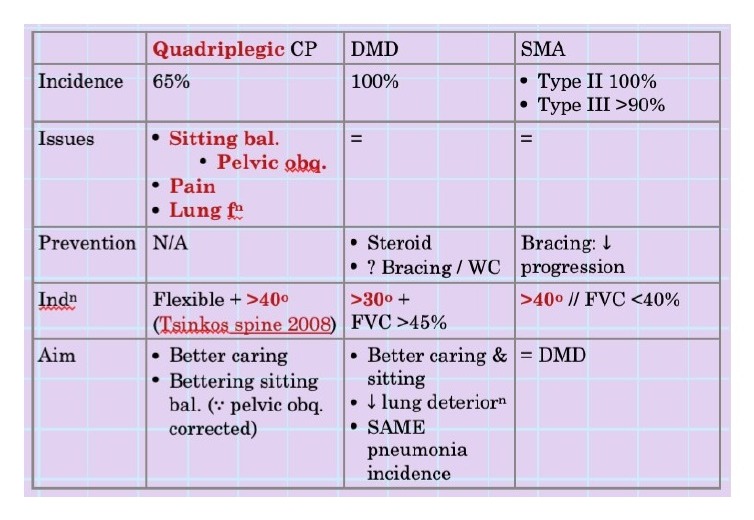
•Caring problem and function (most important)
•Improving sitting posture

Lonstein and Akbarnia classification
Classification / diagram
Fig 1. Classification / diagrammiddle left
Type / groupDefinition / note
1Level pelvis (S curve)
2Pelvic obliquity (C curve)

Direct Q&A

Q1 What diagnostic or radiographic findings support NM scoliosis?

NM scoliosis

•Deformity: Long C curve

Frontal:

•Primary: (erector spinae imbalance)
•Secondary: (compensatory for hip adductor contracture)
•Spinopelvic impingement

Sagittal:

•Most compensation for hip  hyperlordosis
•TL/L more as more mobile
•More listing
Q2 How is NM scoliosis classified here?

1: Level pelvis (S curve)

•2: Pelvic obliquity (C curve)
Q3 How is NM scoliosis managed?

NM scoliosis

•Deformity: Long C curve

Frontal:

•Primary: (erector spinae imbalance)
•Secondary: (compensatory for hip adductor contracture)
•Spinopelvic impingement

Sagittal:

•Most compensation for hip  hyperlordosis
•TL/L more as more mobile
•More listing
•Long fusion
•Assess underlying cause
•Caring problem and function (most important)
•Improving sitting posture

Lonstein and Akbarnia classification

Type / groupDefinition / note
1Level pelvis (S curve)

Raw speaker-note hierarchy audit

#lvlmarLindentlogicaloriginal note line
10NoneNone0NM scoliosis
20NoneNone0Deformity: Long C curve
30NoneNone0Frontal:
40171450-1714501Primary: (erector spinae imbalance)
50171450-1714501Secondary: (compensatory for hip adductor contracture)
60000Spinopelvic impingement
70000Sagittal:
80000Most compensation for hip  hyperlordosis
90000TL/L more as more mobile
100000More listing
110000Long fusion
120000Assess underlying cause
130000Caring problem and function (most important)
140000Improving sitting posture
150NoneNone0Lonstein and Akbarnia classification
160NoneNone01: Level pelvis (S curve)
170NoneNone02: Pelvic obliquity (C curve)

Improved semantic hierarchy used for the study notes

#semantic levelsection?rewritten line
10NM scoliosis
21Deformity: Long C curve
30yesFrontal:
41Primary: (erector spinae imbalance)
51Secondary: (compensatory for hip adductor contracture)
61Spinopelvic impingement
70yesSagittal:
81Most compensation for hip  hyperlordosis
91TL/L more as more mobile
101More listing
111Long fusion
121Assess underlying cause
131Caring problem and function (most important)
141Improving sitting posture
150yesLonstein and Akbarnia classification
1611: Level pelvis (S curve)
1712: Pelvic obliquity (C curve)