FRCS Paediatric Ortho — improved notes
FRCS Paediatric Ortho — visual inline notes

104. Gait analysis

visual-inline rebuild1 extracted figuresspeaker notes XML22 study lines1 Q&A

Individual slide images have been cropped from the rendered slide and inserted beside the matching note section. The full slide remains below only for layout/audit.

Clean FRCS notes with inline figures

Gait analysis
Operative / approach image
Fig 1. Operative / approach imagetop left
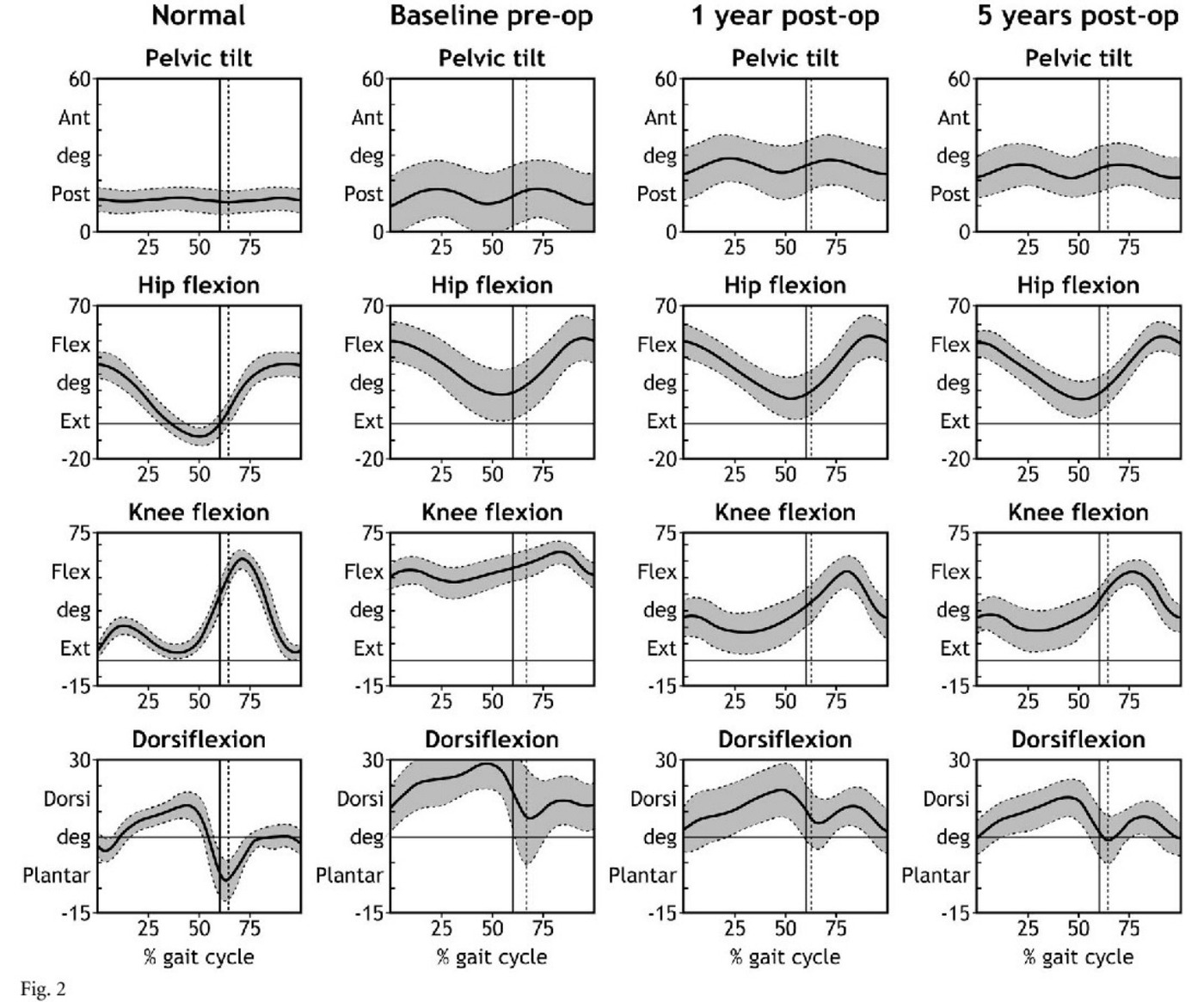
•Systematic description, assessment and measurement of the quantities that characterize human locomotion
•From top to bottom
•Pelvis, hip, knee, ankle
•Left hand side of graph = stance phase
•Right hand side of graph = swing phase
•Increase knee flexion in stance phase
•Increase ankle DF in stance phase
•→ Crouch gait

Components:

•Kinematic
•Kinetic
•EMG
•Energy consumption
•Biomechanics: study of biomaterial response to load (static vs dynamic)

Kinematic: study on motion over time = ROM

Kinetic: study on force associated motion = force

Set up:

•1. 2D video analysis
•2. 3D computer analysis using specialized markers on specific bony landmarks
•3. Force plates to measure GFR
•4. EMG to look at muscle firing patterns

Direct Q&A

Q1 What are the diagnostic findings and management points for Gait analysis?

Gait analysis

•Systematic description, assessment and measurement of the quantities that characterize human locomotion
•From top to bottom
•Pelvis, hip, knee, ankle
•Left hand side of graph = stance phase
•Right hand side of graph = swing phase
•Increase knee flexion in stance phase
•Increase ankle DF in stance phase
•→ Crouch gait

Components:

•Kinematic
•Kinetic
•EMG
•Energy consumption
•Biomechanics: study of biomaterial response to load (static vs dynamic)

Kinematic: study on motion over time = ROM

Kinetic: study on force associated motion = force

Set up:

•1. 2D video analysis
•2. 3D computer analysis using specialized markers on specific bony landmarks
•3. Force plates to measure GFR
•4. EMG to look at muscle firing patterns

Raw speaker-note hierarchy audit

#lvlmarLindentlogicaloriginal note line
10000Gait analysis
20000Systematic description, assessment and measurement of the quantities that characterize human locomotion
30000From top to bottom
40000Pelvis, hip, knee, ankle
50000Left hand side of graph = stance phase
60000Right hand side of graph = swing phase
70000Increase knee flexion in stance phase
80000Increase ankle DF in stance phase
90000-> Crouch gait
100000Components:
110228600-2286001Kinematic
120228600-2286001Kinetic
130228600-2286001EMG
140228600-2286001Energy consumption
150000Biomechanics: study of biomaterial response to load (static vs dynamic)
160000Kinematic: study on motion over time = ROM
170000Kinetic: study on force associated motion = force
180000Set up:
1900001. 2D video analysis
2000002. 3D computer analysis using specialized markers on specific bony landmarks
2100003. Force plates to measure GFR
2200004. EMG to look at muscle firing patterns

Improved semantic hierarchy used for the study notes

#semantic levelsection?rewritten line
10Gait analysis
21Systematic description, assessment and measurement of the quantities that characterize human locomotion
31From top to bottom
41Pelvis, hip, knee, ankle
51Left hand side of graph = stance phase
61Right hand side of graph = swing phase
71Increase knee flexion in stance phase
81Increase ankle DF in stance phase
91→ Crouch gait
100yesComponents:
111Kinematic
121Kinetic
131EMG
141Energy consumption
151Biomechanics: study of biomaterial response to load (static vs dynamic)
160yesKinematic: study on motion over time = ROM
170yesKinetic: study on force associated motion = force
180yesSet up:
1911. 2D video analysis
2012. 3D computer analysis using specialized markers on specific bony landmarks
2113. Force plates to measure GFR
2214. EMG to look at muscle firing patterns