FRCS Paediatric Ortho — improved notes
FRCS Paediatric Ortho — visual inline notes

130. Paediatric fracture hip

visual-inline rebuild1 extracted figuresspeaker notes XML51 study lines8 Q&A

Individual slide images have been cropped from the rendered slide and inserted beside the matching note section. The full slide remains below only for layout/audit.

Clean FRCS notes with inline figures

Paediatric fracture hip

Radiographic description
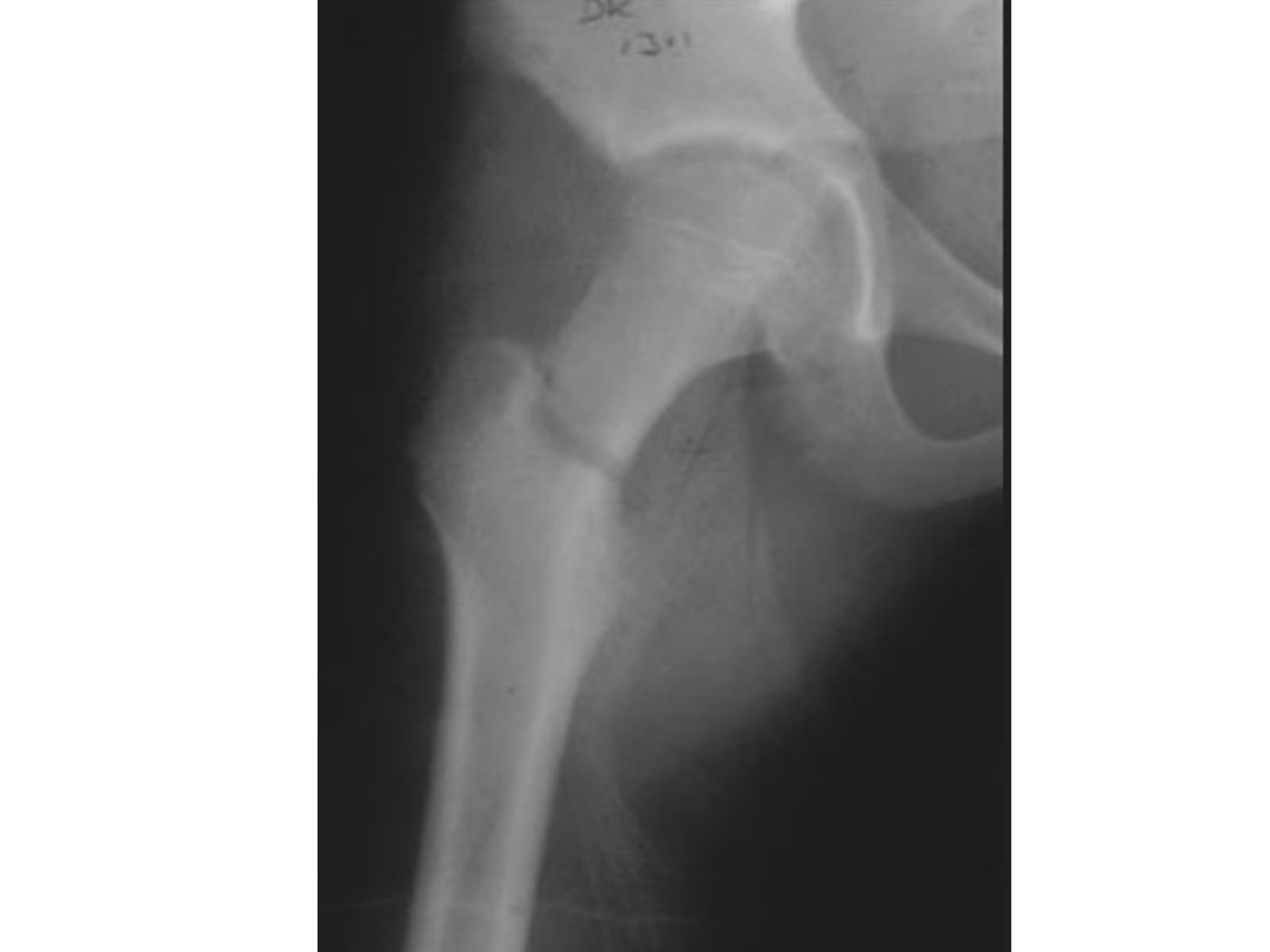
Radiograph / imaging
Fig 1. Radiograph / imagingtop left
•Basal neck of femur fracture in skeletally immature patient, minimally displaced in this view (see cross table lateral Xray)
•Hx: mechanism of injury (ATLS), r/o fracture in same limb, nerve injury
•Surgical emergency in Delbet type 1-3 to decreased AVN risk

Vascular anatomy in difference age

•<4 y.o.: MFCA (lateral epiphyseal artery), LFCA, metaphyseal artery
•4-10 y.o.: MFCA (lateral epiphyseal artery), metaphyseal artery blocked by physis, LFCA regresses
•10-14 y.o.: MFCA (lateral epiphyseal artery), ligament teres artery further regress artery
•>14 y.o. MFCA (lateral epiphyseal artery), metaphyseal artery (anastomosis of metaphyseal and epiphyseal artery re-developed)

Delbet Classification and (AVN risk)

Type / groupDefinition / note
1Transphyseal (40%, 100% if dislocation of epiphysis from acetabulum)
2Transcervical (30%)
3Basal neck (20%)
4Trochanteric (5%)

Treatment

•*** r/o NAI in non walking child
•Conservative: <4 y.o. + undisplaced → hip spica cast

Operative:

Indication: Displaced fracture or >4 y.o.

•ORIF for dislocated transphyseal fracture, otherwise CR + pinning/ screw/ DHS

Fixation:

•Transphyseal pin (for Type 1 fracture or proximal type 2 with minimal metaphyseal bone for anchorage) → Consider post op hip spica if young
•Physeal sparing screws for type 2-4 + young
•Transphyseal screws (near skeletal maturity + need more proximal purchase for stable fixation)
•Avoid posterior cortex protrusion → vascular injury
•Type 4 can fix with paediatric DHS / locking hip plate
•+ Capsulotomy in type 1-3

Postop rehab

•TTWB minimal 6 weeks
•Progression to FWB 6-12 weeks

Return to activity: when radiographically healed

•Removal of implant: old no, young yes
•Need long term FU for physeal arrest and AVN

Complication

•AVN

Risk factor:

3-8 y.o. (Pure MCFA blood supply)

•Delbet type (40/30/20/5)

Ratliff classification

•I complete head – epiphyseal artery (all), worst prognosis
•II partial epiphysis – limited epiphyseal artery
•III between physis and fracture line – superior metaphyseal artery, best prognosis
•Coxa vara (neck shaft angle <130 deg) due to malunion

Treatment depends on age

•<3 y.o.: likely remodel
•<8 y.o.: trochanteric apophysis growth arrest
•Older + trendelenberg gait: Valgus osteotomy
•Coxa valgus in type 4 fracture
•Physeal arrest + LLD
•Chondrolysis

Direct Q&A

Q1 What are the radiographic findings for Paediatric fracture hip?
•Basal neck of femur fracture in skeletally immature patient, minimally displaced in this view (see cross table lateral Xray)
•Hx: mechanism of injury (ATLS), r/o fracture in same limb, nerve injury

Surgical emergency in Delbet type 1-3 to decreased AVN risk

Q2 What anatomy is relevant to Paediatric fracture hip?
•<4 y.o.: MFCA (lateral epiphyseal artery), LFCA, metaphyseal artery
•4-10 y.o.: MFCA (lateral epiphyseal artery), metaphyseal artery blocked by physis, LFCA regresses
•10-14 y.o.: MFCA (lateral epiphyseal artery), ligament teres artery further regress artery
•>14 y.o. MFCA (lateral epiphyseal artery), metaphyseal artery (anastomosis of metaphyseal and epiphyseal artery re-developed)
Q3 How is Paediatric fracture hip classified here?
•1: Transphyseal (40%, 100% if dislocation of epiphysis from acetabulum)
•2: Transcervical (30%)
•3: Basal neck (20%)
•4: Trochanteric (5%)
Q4 How is Paediatric fracture hip managed?

*** r/o NAI in non walking child

•Conservative: <4 y.o. + undisplaced → hip spica cast
Q5 What are the indications listed for Paediatric fracture hip?

ORIF for dislocated transphyseal fracture, otherwise CR + pinning/ screw/ DHS

Q6 What rehabilitation plan is listed for Paediatric fracture hip?
•TTWB minimal 6 weeks
•Progression to FWB 6-12 weeks
Q7 What complications are listed for Paediatric fracture hip?

AVN

Risk factor:

3-8 y.o. (Pure MCFA blood supply)

•Delbet type (40/30/20/5)

Ratliff classification

•I complete head – epiphyseal artery (all), worst prognosis
•II partial epiphysis – limited epiphyseal artery
•III between physis and fracture line – superior metaphyseal artery, best prognosis
•Coxa vara (neck shaft angle <130 deg) due to malunion

Treatment depends on age

•<3 y.o.: likely remodel
•<8 y.o.: trochanteric apophysis growth arrest
•Older + trendelenberg gait: Valgus osteotomy
•Coxa valgus in type 4 fracture
•Physeal arrest + LLD
•Chondrolysis
Q8 What blood supply pattern is described for Paediatric fracture hip?

Delbet type (40/30/20/5)

Raw speaker-note hierarchy audit

#lvlmarLindentlogicaloriginal note line
10NoneNone0Paediatric fracture hip
20NoneNone0Describe Xray:
30000Basal neck of femur fracture in skeletally immature patient, minimally displaced in this view (see cross table lateral Xray)
40000Hx: mechanism of injury (ATLS), r/o fracture in same limb, nerve injury
50000Surgical emergency in Delbet type 1-3 to decreased AVN risk
60000Vascular anatomy in difference age
70171450-1714501<4 y.o.: MFCA (lateral epiphyseal artery), LFCA, metaphyseal artery
80171450-17145014-10 y.o.: MFCA (lateral epiphyseal artery), metaphyseal artery blocked by physis, LFCA regresses
90171450-171450110-14 y.o.: MFCA (lateral epiphyseal artery), ligament teres artery further regress artery
100171450-1714501>14 y.o. MFCA (lateral epiphyseal artery), metaphyseal artery (anastomosis of metaphyseal and epiphyseal artery re-developed)
110000Delbet Classification and (AVN risk)
121457200011: Transphyseal (40%, 100% if dislocation of epiphysis from acetabulum)
131457200012: Transcervical (30%)
141457200013: Basal neck (20%)
151457200014: Trochanteric (5%)
160000Treatment
170000*** r/o NAI in non walking child
180000Conservative: <4 y.o. + undisplaced → hip spica cast
190000Operative:
200000Indication: Displaced fracture or >4 y.o.
210171450-1714501ORIF for dislocated transphyseal fracture, otherwise CR + pinning/ screw/ DHS
220000Fixation:
230171450-1714501Transphyseal pin (for Type 1 fracture or proximal type 2 with minimal metaphyseal bone for anchorage) → Consider post op hip spica if young
240171450-1714501Physeal sparing screws for type 2-4 + young
250171450-1714501Transphyseal screws (near skeletal maturity + need more proximal purchase for stable fixation)
261628650-1714502Avoid posterior cortex protrusion → vascular injury
270171450-1714501Type 4 can fix with paediatric DHS / locking hip plate
280000+ Capsulotomy in type 1-3
290000Postop rehab
300000TTWB minimal 6 weeks
310000Progression to FWB 6-12 weeks
320000Return to activity: when radiographically healed
330000Removal of implant: old no, young yes
340000Need long term FU for physeal arrest and AVN
350000Complication
360171450-1714501AVN
371628650-1714502Risk factor:
3821085850-17145033-8 y.o. (Pure MCFA blood supply)
3921085850-1714503Delbet type (40/30/20/5)
401628650-1714502Ratliff classification
4121085850-1714503I complete head – epiphyseal artery (all), worst prognosis
4221085850-1714503II partial epiphysis – limited epiphyseal artery
4321085850-1714503III between physis and fracture line – superior metaphyseal artery, best prognosis
440171450-1714501Coxa vara (neck shaft angle <130 deg) due to malunion
451628650-1714502Treatment depends on age
4621085850-1714503<3 y.o.: likely remodel
4721085850-1714503<8 y.o.: trochanteric apophysis growth arrest
4821085850-1714503Older + trendelenberg gait: Valgus osteotomy
490171450-1714501Coxa valgus in type 4 fracture
500171450-1714501Physeal arrest + LLD
510171450-1714501Chondrolysis

Improved semantic hierarchy used for the study notes

#semantic levelsection?rewritten line
10Paediatric fracture hip
20yesRadiographic description
31Basal neck of femur fracture in skeletally immature patient, minimally displaced in this view (see cross table lateral Xray)
41Hx: mechanism of injury (ATLS), r/o fracture in same limb, nerve injury
51Surgical emergency in Delbet type 1-3 to decreased AVN risk
60yesVascular anatomy in difference age
71<4 y.o.: MFCA (lateral epiphyseal artery), LFCA, metaphyseal artery
814-10 y.o.: MFCA (lateral epiphyseal artery), metaphyseal artery blocked by physis, LFCA regresses
9110-14 y.o.: MFCA (lateral epiphyseal artery), ligament teres artery further regress artery
101>14 y.o. MFCA (lateral epiphyseal artery), metaphyseal artery (anastomosis of metaphyseal and epiphyseal artery re-developed)
110yesDelbet Classification and (AVN risk)
1211: Transphyseal (40%, 100% if dislocation of epiphysis from acetabulum)
1312: Transcervical (30%)
1413: Basal neck (20%)
1514: Trochanteric (5%)
160yesTreatment
171*** r/o NAI in non walking child
181Conservative: <4 y.o. + undisplaced → hip spica cast
190yesOperative:
200yesIndication: Displaced fracture or >4 y.o.
211ORIF for dislocated transphyseal fracture, otherwise CR + pinning/ screw/ DHS
220yesFixation:
231Transphyseal pin (for Type 1 fracture or proximal type 2 with minimal metaphyseal bone for anchorage) → Consider post op hip spica if young
241Physeal sparing screws for type 2-4 + young
251Transphyseal screws (near skeletal maturity + need more proximal purchase for stable fixation)
262Avoid posterior cortex protrusion → vascular injury
271Type 4 can fix with paediatric DHS / locking hip plate
281+ Capsulotomy in type 1-3
290yesPostop rehab
301TTWB minimal 6 weeks
311Progression to FWB 6-12 weeks
320yesReturn to activity: when radiographically healed
331Removal of implant: old no, young yes
341Need long term FU for physeal arrest and AVN
350yesComplication
361AVN
372yesRisk factor:
382yes3-8 y.o. (Pure MCFA blood supply)
393Delbet type (40/30/20/5)
402yesRatliff classification
413I complete head – epiphyseal artery (all), worst prognosis
423II partial epiphysis – limited epiphyseal artery
433III between physis and fracture line – superior metaphyseal artery, best prognosis
443Coxa vara (neck shaft angle <130 deg) due to malunion
452yesTreatment depends on age
463<3 y.o.: likely remodel
473<8 y.o.: trochanteric apophysis growth arrest
483Older + trendelenberg gait: Valgus osteotomy
491Coxa valgus in type 4 fracture
501Physeal arrest + LLD
511Chondrolysis