FRCS Paediatric Ortho — improved notes
FRCS Paediatric Ortho — visual inline notes

133. Distal femur fracture

visual-inline rebuild1 extracted figuresspeaker notes XML25 study lines4 Q&A

Individual slide images have been cropped from the rendered slide and inserted beside the matching note section. The full slide remains below only for layout/audit.

Clean FRCS notes with inline figures

Distal femur fracture
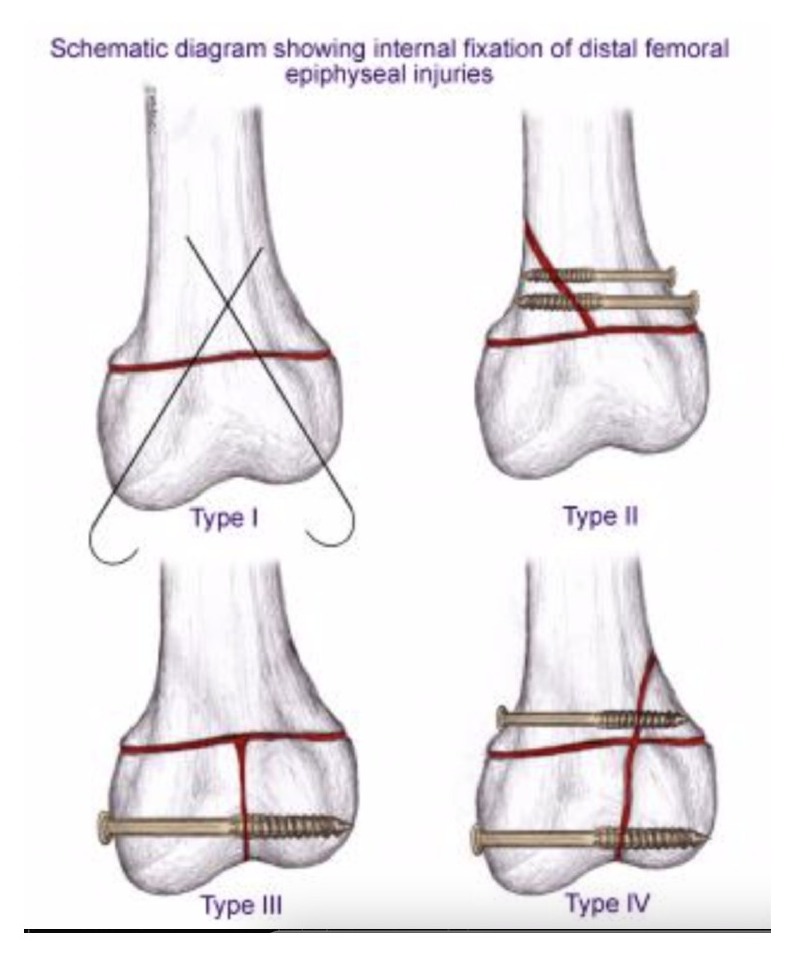
Classification / diagram
Fig 1. Classification / diagramtop left
•SH
Type / groupDefinition / note
IICommonest, metaphysis fragment at compression side, risk of arrest
IIIDistal femur (MFC most + close to physeal closure) (lateral tibial plateau + intraarticular fracture + MCL injury → OT)
IVrisk of partial physeal arrest → angular deformity

Assessment:

Look out for:

•Popliteal artery injury
•Collateral and cruciate injury
•Peroneal nerve injury
•CR: reverse original mechanism

Cast position

•hyperextension: initial in 90 degrees flexion then gradual extension
•Hyperflexion: full extension
•valgus/varus: flexion 10-20 degrees
•Operation

Indication – failed CR, unstable in cast

•Fixation
•Screw parallel to physis (large epiphyseal / metaphyseal fragment)
•Transphyseal pin (small epiphyseal / metaphyseal fragment or close to maturity → increase stability) → bury under skin, otherwise may risk septic knee

Complication:

•30-50% physeal arrest → Angular deformity
•Not remodel well
•Tolerable if <2yr of growth remaining
•LLD

Direct Q&A

Q1 What diagnostic or radiographic findings support Distal femur fracture?

Distal femur fracture

•SH
Type / groupDefinition / note
IICommonest, metaphysis fragment at compression side, risk of arrest
IIIDistal femur (MFC most + close to physeal closure) (lateral tibial plateau + intraarticular fracture + MCL injury → OT)
IVrisk of partial physeal arrest → angular deformity

Assessment:

Look out for:

•Popliteal artery injury
•Collateral and cruciate injury
•Peroneal nerve injury
Q2 What are the indications listed for Distal femur fracture?

Fixation

•Screw parallel to physis (large epiphyseal / metaphyseal fragment)
•Transphyseal pin (small epiphyseal / metaphyseal fragment or close to maturity → increase stability) → bury under skin, otherwise may risk septic knee
Q3 What complications are listed for Distal femur fracture?
•30-50% physeal arrest → Angular deformity
•Not remodel well
•Tolerable if <2yr of growth remaining
•LLD
Q4 How is Distal femur fracture managed?
•Collateral and cruciate injury
•Peroneal nerve injury
•CR: reverse original mechanism

Cast position

•hyperextension: initial in 90 degrees flexion then gradual extension
•Hyperflexion: full extension
•valgus/varus: flexion 10-20 degrees
•Operation

Indication – failed CR, unstable in cast

•Fixation
•Screw parallel to physis (large epiphyseal / metaphyseal fragment)
•Transphyseal pin (small epiphyseal / metaphyseal fragment or close to maturity → increase stability) → bury under skin, otherwise may risk septic knee

Complication:

•30-50% physeal arrest → Angular deformity
•Not remodel well
•Tolerable if <2yr of growth remaining

Raw speaker-note hierarchy audit

#lvlmarLindentlogicaloriginal note line
10NoneNone0Distal femur fracture
20NoneNone0SH
30NoneNone0II – Commonest, metaphysis fragment at compression side, risk of arrest
40NoneNone0III – Distal femur (MFC most + close to physeal closure) (lateral tibial plateau + intraarticular fracture + MCL injury → OT)
50NoneNone0IV – risk of partial physeal arrest → angular deformity
60NoneNone0Assessment:
70NoneNone0Look out for:
80171450-1714501Popliteal artery injury
90171450-1714501Collateral and cruciate injury
100171450-1714501Peroneal nerve injury
110NoneNone0CR: reverse original mechanism
120NoneNone0Cast position
130171450-1714501hyperextension: initial in 90 degrees flexion then gradual extension
140171450-1714501Hyperflexion: full extension
150171450-1714501valgus/varus: flexion 10-20 degrees
160000OT:
170000Indication – failed CR, unstable in cast
180000Fixation
190171450-1714501Screw parallel to physis (large epiphyseal / metaphyseal fragment)
200171450-1714501Transphyseal pin (small epiphyseal / metaphyseal fragment or close to maturity → increase stability) → bury under skin, otherwise may risk septic knee
210000Complication:
220171450-171450130-50% physeal arrest --> Angular deformity
231628650-1714502Not remodel well
241628650-1714502Tolerable if <2yr of growth remaining
250171450-1714501LLD

Improved semantic hierarchy used for the study notes

#semantic levelsection?rewritten line
10Distal femur fracture
21SH
31II – Commonest, metaphysis fragment at compression side, risk of arrest
41III – Distal femur (MFC most + close to physeal closure) (lateral tibial plateau + intraarticular fracture + MCL injury → OT)
51IV – risk of partial physeal arrest → angular deformity
60yesAssessment:
70yesLook out for:
81Popliteal artery injury
91Collateral and cruciate injury
101Peroneal nerve injury
111CR: reverse original mechanism
120yesCast position
131hyperextension: initial in 90 degrees flexion then gradual extension
141Hyperflexion: full extension
151valgus/varus: flexion 10-20 degrees
161Operation
170yesIndication – failed CR, unstable in cast
181Fixation
191Screw parallel to physis (large epiphyseal / metaphyseal fragment)
201Transphyseal pin (small epiphyseal / metaphyseal fragment or close to maturity → increase stability) → bury under skin, otherwise may risk septic knee
210yesComplication:
22130-50% physeal arrest → Angular deformity
232Not remodel well
242Tolerable if <2yr of growth remaining
251LLD