FRCS Paediatric Ortho — improved notes
FRCS Paediatric Ortho — visual inline notes

136. Cozen fracture

visual-inline rebuild1 extracted figuresspeaker notes XML21 study lines3 Q&A

Individual slide images have been cropped from the rendered slide and inserted beside the matching note section. The full slide remains below only for layout/audit.

Clean FRCS notes with inline figures

Cozen fracture

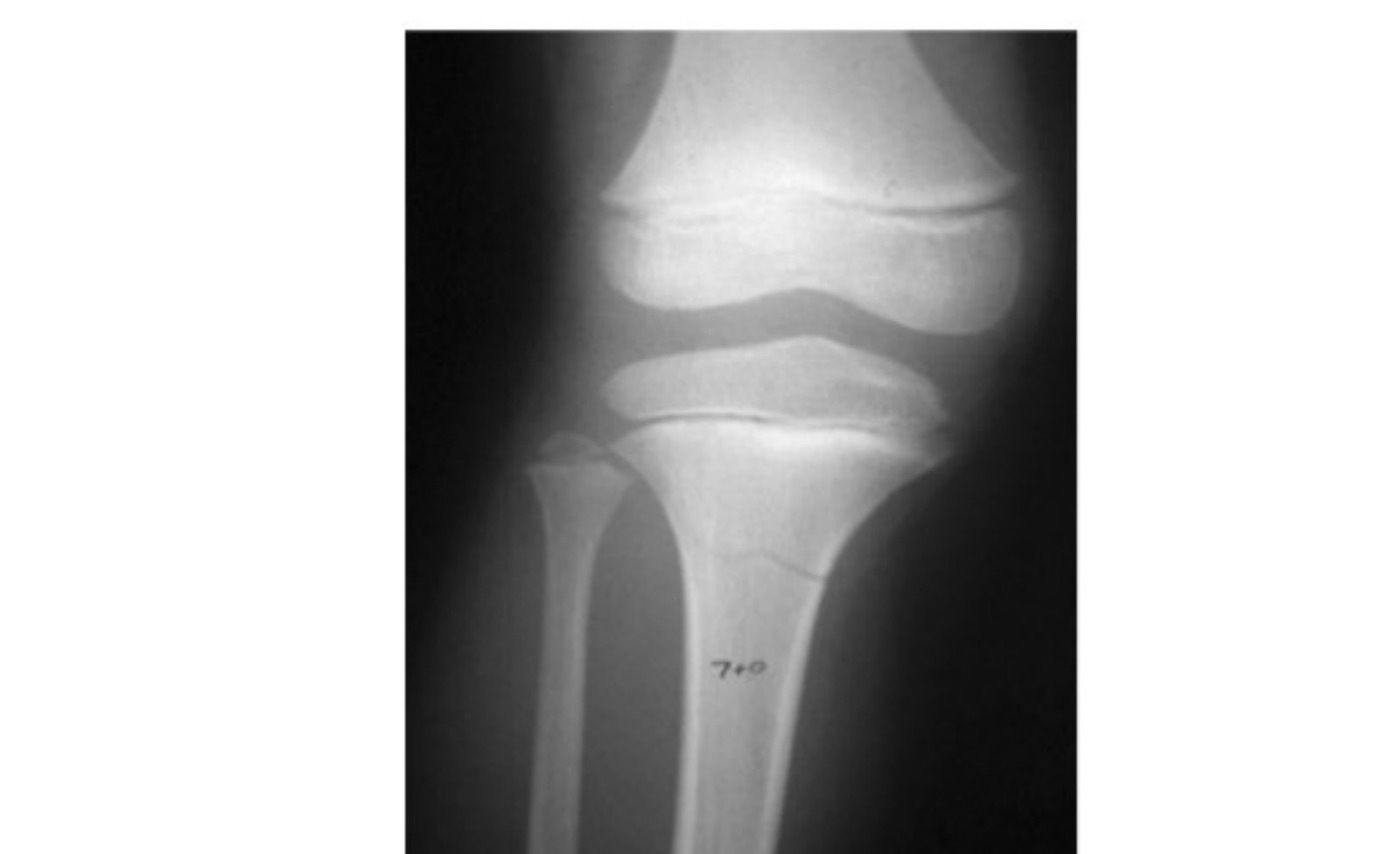
AP Xray knee of skeletally immature patient
Radiograph / imaging
Fig 1. Radiograph / imagingtop left
•Fracture over proximal tibia
•Incomplete fracture over medial side of metaphyseal area
•No plastic deformity of fibula
•Clinically rule out open fracture, compartment syndrome
•Undisplaced, treat conservatively, long leg cast with knee in full extension and varus molding
•As known to have overgrowth causing valgus deformity

OT indication: torn pes anserinus

•Associated problems
•Compartment syndrome (recurrent anterior tibial artery)
•Vessel injury (popliteal artery tethered)
•Cozen phenomenon (progressive valgus deformity secondary to medial tibial overgrowth/ fracture hyperemia) – 50-90%. Most resolve in 24months
•Recurvatum (anterior closure of physis)
•LLD (average 9mm)

•Mechanism of injury: valgus bending → medial tibial metaphysis fail in tension
•Usually from trampoline
•Deforming forces in a proximal tibia fracture
•Proximal fragment extension by patellar tendon, varus by pes
•Distal fragment valgus force by tib ant, flexion by gastroc

Direct Q&A

Q1 What are the radiographic findings for Cozen fracture?

Fracture over proximal tibia

•Incomplete fracture over medial side of metaphyseal area
•No plastic deformity of fibula
•Clinically rule out open fracture, compartment syndrome
•Undisplaced, treat conservatively, long leg cast with knee in full extension and varus molding
•As known to have overgrowth causing valgus deformity
Q2 What are the indications listed for Cozen fracture?

Associated problems

•Compartment syndrome (recurrent anterior tibial artery)
•Vessel injury (popliteal artery tethered)
•Cozen phenomenon (progressive valgus deformity secondary to medial tibial overgrowth/ fracture hyperemia) – 50-90%. Most resolve in 24months
•Recurvatum (anterior closure of physis)
•LLD (average 9mm)
Q3 How is Cozen fracture managed?
•Undisplaced, treat conservatively, long leg cast with knee in full extension and varus molding
•As known to have overgrowth causing valgus deformity

OT indication: torn pes anserinus

•Associated problems
•Compartment syndrome (recurrent anterior tibial artery)
•Vessel injury (popliteal artery tethered)
•Cozen phenomenon (progressive valgus deformity secondary to medial tibial overgrowth/ fracture hyperemia) – 50-90%. Most resolve in 24months
•Recurvatum (anterior closure of physis)
•LLD (average 9mm)

•Mechanism of injury: valgus bending → medial tibial metaphysis fail in tension
•Usually from trampoline
•Deforming forces in a proximal tibia fracture
•Proximal fragment extension by patellar tendon, varus by pes
•Distal fragment valgus force by tib ant, flexion by gastroc

Raw speaker-note hierarchy audit

#lvlmarLindentlogicaloriginal note line
10000Cozen fracture
20000AP Xray knee of skeletally immature patient
30000Fracture over proximal tibia
40000Incomplete fracture over medial side of metaphyseal area
50000No plastic deformity of fibula
60000Clinically rule out open fracture, compartment syndrome
70000Undisplaced, treat conservatively, long leg cast with knee in full extension and varus molding
80000As known to have overgrowth causing valgus deformity
90000OT indication: torn pes anserinus
100000Associated problems
110228600-2286001Compartment syndrome (recurrent anterior tibial artery)
120228600-2286001Vessel injury (popliteal artery tethered)
130228600-2286001Cozen phenomenon (progressive valgus deformity secondary to medial tibial overgrowth/ fracture hyperemia) – 50-90%. Most resolve in 24months
140228600-2286001Recurvatum (anterior closure of physis)
150228600-2286001LLD (average 9mm)
160000===========================================
170000Mechanism of injury: valgus bending → medial tibial metaphysis fail in tension
180000Usually from trampoline
190000Deforming forces in a proximal tibia fracture
200000Proximal fragment extension by patellar tendon, varus by pes
210000Distal fragment valgus force by tib ant, flexion by gastroc

Improved semantic hierarchy used for the study notes

#semantic levelsection?rewritten line
10Cozen fracture
20yesAP Xray knee of skeletally immature patient
31Fracture over proximal tibia
41Incomplete fracture over medial side of metaphyseal area
51No plastic deformity of fibula
61Clinically rule out open fracture, compartment syndrome
71Undisplaced, treat conservatively, long leg cast with knee in full extension and varus molding
81As known to have overgrowth causing valgus deformity
90yesOT indication: torn pes anserinus
101Associated problems
111Compartment syndrome (recurrent anterior tibial artery)
121Vessel injury (popliteal artery tethered)
131Cozen phenomenon (progressive valgus deformity secondary to medial tibial overgrowth/ fracture hyperemia) – 50-90%. Most resolve in 24months
141Recurvatum (anterior closure of physis)
151LLD (average 9mm)
160——
171Mechanism of injury: valgus bending → medial tibial metaphysis fail in tension
181Usually from trampoline
191Deforming forces in a proximal tibia fracture
201Proximal fragment extension by patellar tendon, varus by pes
211Distal fragment valgus force by tib ant, flexion by gastroc